

Personal training is a rapidly expanding field, fueled by a growing awareness of health and wellness; exercise professionals are in demand.
Guides, like the ACE health coach manual, provide essential resources for fitness and wellness training.
Exercise standards are crucial for healthcare professionals, ensuring safe and effective personal training practices, following established guidelines.
A. The Growing Demand for Personal Trainers
Demand for qualified personal trainers is surging, driven by increasing health consciousness and a desire for individualized fitness programs. This trend is reflected in the proliferation of resources designed for exercise professionals, such as comprehensive guides to personal training.
Several factors contribute to this growth. A greater understanding of the preventative benefits of exercise, coupled with rising rates of obesity and chronic diseases, motivates individuals to seek expert guidance. The need for tailored training plans, addressing specific goals and limitations, further fuels the demand.
Resources like the ACE health coach manual highlight the importance of ongoing education and professional development for trainers. The market responds with readily available PDF downloads and comprehensive materials, ensuring professionals stay current with best practices and guidelines. This accessibility supports the expanding field and ensures quality service.
B. Scope of Practice for Exercise Professionals
The scope of practice for exercise professionals, particularly personal trainers, is clearly defined to ensure client safety and ethical conduct. Guides for personal training emphasize that trainers operate within their expertise, focusing on fitness assessment, program design, and exercise instruction.
Crucially, trainers are not qualified to diagnose, treat, or prescribe medical interventions. Referral to qualified healthcare professionals is essential when clients present with medical conditions or require specialized care. Understanding these boundaries is paramount, as highlighted in resources for exercise professionals.
Guidelines and standards, like those detailed in exercise standards for testing and training, delineate acceptable practices. Staying within this defined scope protects both the client and the trainer, fostering trust and responsible fitness guidance. Continuing education reinforces these boundaries and promotes ethical training.
C. Ethical Considerations in Personal Training
Ethical considerations are fundamental to the practice of personal training. Guides for exercise professionals consistently emphasize integrity, objectivity, and a commitment to client well-being. Maintaining client confidentiality is paramount, protecting sensitive health information.
Personal trainers must avoid conflicts of interest, ensuring recommendations are based solely on the client’s needs, not personal gain. Competence is crucial; trainers should only offer services within their qualifications and seek continuing education to stay current. Honest representation of credentials and services is also vital.
Adhering to professional guidelines, as outlined for exercise professionals, builds trust and demonstrates a commitment to responsible fitness practice. Upholding these ethical standards safeguards clients and enhances the credibility of the personal training profession.

II. Foundational Knowledge for Personal Trainers
Exercise professionals require a strong base in anatomy, physiology, and biomechanics; guides emphasize these areas.
Understanding exercise science principles is vital for effective training and client program design.
A. Anatomy and Physiology Basics
Personal trainers must possess a solid understanding of human anatomy and physiology to design safe and effective exercise programs. This foundational knowledge encompasses the musculoskeletal system – bones, muscles, joints, and connective tissues – and how they interact during movement.
A comprehensive grasp of physiological systems, including cardiovascular, respiratory, and nervous systems, is equally crucial. Understanding how the body responds to acute and chronic exercise stress allows trainers to tailor programs to individual client needs and goals.
Guides for exercise professionals consistently highlight the importance of knowing muscle origins, insertions, and actions. Furthermore, knowledge of energy systems – aerobic and anaerobic – is essential for prescribing appropriate intensity and duration. This foundational understanding informs program design, injury prevention, and client education, ensuring optimal results and client safety.
B. Understanding Biomechanics
Biomechanics, the study of human movement, is a cornerstone of effective personal training. Exercise professionals utilize biomechanical principles to analyze movement patterns, identify inefficiencies, and minimize the risk of injury. Understanding levers, forces, and planes of motion is paramount.
A solid grasp of biomechanics allows trainers to assess posture, gait, and movement mechanics during various exercises. This analysis informs corrective exercise strategies and program modifications. Proper form and technique are emphasized to maximize effectiveness and prevent strain.
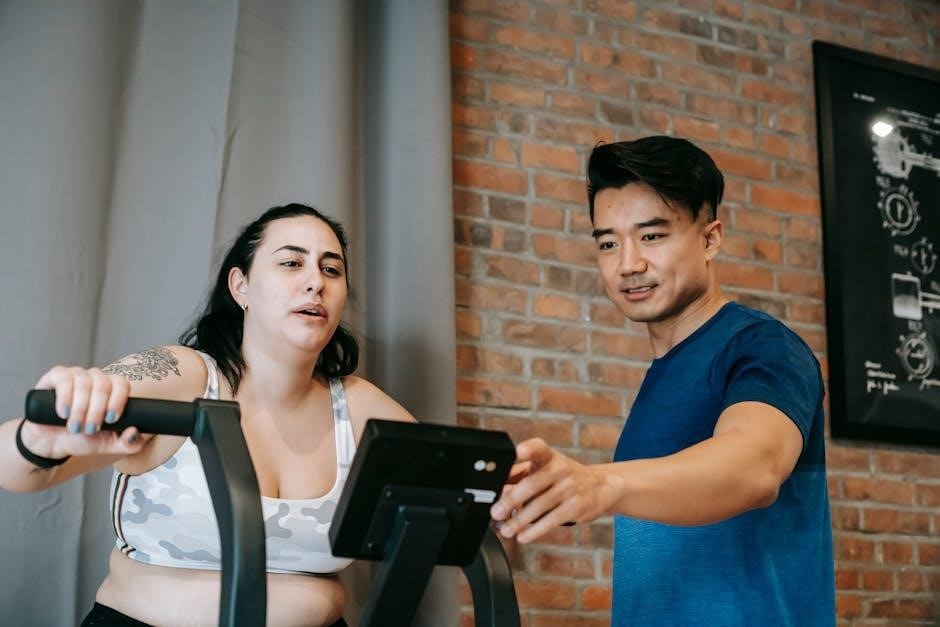
Guides for trainers stress the importance of applying biomechanical principles to optimize movement efficiency. Knowledge of joint angles, muscle activation patterns, and ground reaction forces is vital. Ultimately, biomechanical understanding empowers trainers to enhance performance and promote long-term musculoskeletal health for their clients.
C. Principles of Exercise Science
Exercise science provides the foundational knowledge for effective personal training. Exercise professionals must understand key principles like specificity, overload, progression, and reversibility to design impactful programs. These principles dictate how the body adapts to physical stress.
Guides for trainers emphasize the importance of applying these principles to individual client needs and goals. Specificity dictates that training should align with desired outcomes. Overload requires progressively increasing demands to stimulate adaptation. Progression ensures gradual increases to avoid injury, while reversibility highlights the loss of gains with detraining.
Furthermore, understanding concepts like energy systems, metabolic responses, and hormonal influences is crucial. A strong foundation in exercise science enables trainers to create safe, effective, and personalized fitness plans, maximizing client results and promoting long-term health.

III. Client Assessment & Program Design
Personal trainers utilize assessments to gather data, establishing baseline fitness levels; guides emphasize thorough screening.
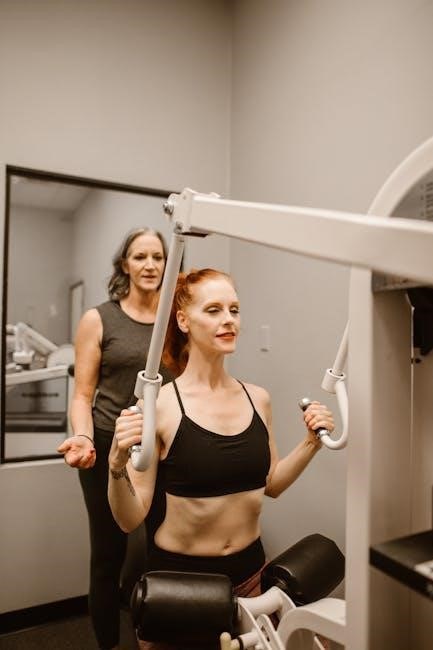
Effective program design hinges on SMART goals and client motivation, tailoring plans for optimal results.
A. Initial Client Consultation & Screening
Personal training begins with a comprehensive initial consultation, a cornerstone detailed in exercise professional guides. This crucial first step involves building rapport and understanding the client’s history, goals, and current fitness level.
Effective screening is paramount, encompassing health questionnaires and lifestyle assessments to identify potential risks or contraindications to exercise. Guidelines emphasize the importance of identifying pre-existing conditions like cardiovascular disease or diabetes, requiring tailored program modifications.
A thorough consultation also explores client motivation, adherence factors, and preferred exercise modalities. This information informs the development of realistic and sustainable training plans. Professionals must document all findings meticulously, ensuring a safe and effective training experience, adhering to best practices outlined in reputable guides.
B. Fitness Assessments: Protocols & Interpretation
Exercise professional guides detail standardized fitness assessments as vital for baseline data and progress tracking. Protocols encompass cardiorespiratory fitness tests (like step tests or treadmill assessments), muscular strength and endurance evaluations, and assessments of flexibility and body composition.
Accurate administration and consistent protocols are crucial for reliable results. Training emphasizes proper technique and safety precautions during testing. Interpretation of results requires understanding normative data and individual client factors.
Guidelines stress that assessments aren’t merely about numbers; they inform program design and monitor client response. Fitness professionals must translate data into actionable insights, tailoring exercise prescriptions to address specific weaknesses and achieve client goals. Thorough documentation and clear communication of results are essential components of effective personal training.
C. Goal Setting: SMART Goals & Client Motivation
Exercise professional guides highlight the importance of collaborative goal setting with clients. The SMART framework – Specific, Measurable, Achievable, Relevant, and Time-bound – is a cornerstone of effective personal training. Goals should align with client values and motivations, fostering intrinsic drive.
Training emphasizes that simply having goals isn’t enough; maintaining client motivation is paramount. Strategies include providing positive reinforcement, celebrating small victories, and adapting programs to prevent plateaus.
Guidelines suggest regular check-ins to reassess progress and adjust goals as needed. Understanding a client’s ‘why’ – their underlying reasons for seeking fitness – is crucial. A skilled exercise professional acts as a coach and motivator, empowering clients to overcome challenges and sustain long-term adherence to their fitness journey.
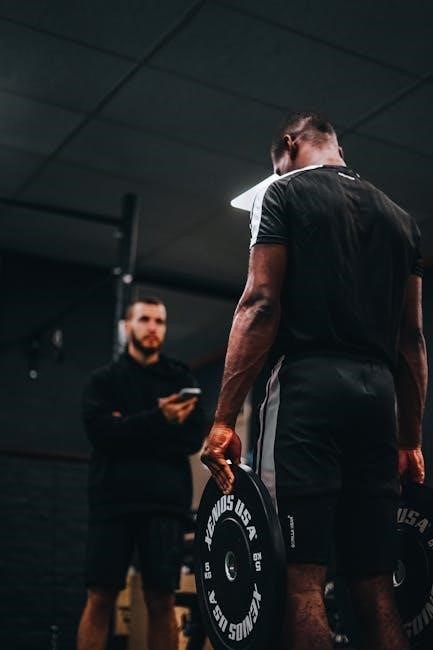
IV. Exercise Programming Principles
Exercise professionals utilize guidelines for program design, incorporating cardiorespiratory, resistance, and flexibility training.
Personal training demands individualized plans, considering client goals and fitness levels, as detailed in guides.
A. Cardiorespiratory Training: Methods & Intensity
Cardiorespiratory training, a cornerstone of personal training, encompasses diverse methods like brisk walking, biking, swimming, and running, as highlighted in exercise professionals’ guides.
Moderate aerobic activity, such as mowing the lawn, elevates heart rate and improves endurance, while vigorous exercise, like swimming laps, demands greater exertion.
Fitness professionals must understand intensity levels; moderate activity allows conversation, while vigorous activity limits it.
Effective program design considers individual fitness levels and goals, progressively increasing duration and intensity.
Guidelines emphasize the importance of regular physical activity for overall health, reducing risks of chronic diseases like heart disease.
Proper warm-up and cool-down phases are essential components, preparing the body for exertion and aiding recovery.
Personal trainers utilize various methods to monitor intensity, including heart rate monitoring and perceived exertion scales.
B. Resistance Training: Techniques & Progression
Resistance training, vital for personal training programs, builds strength, endurance, and muscle mass, as detailed in exercise professionals’ guides.
Effective techniques include utilizing free weights, resistance bands, and bodyweight exercises, catering to diverse fitness levels.
Proper form is paramount to prevent injuries; personal trainers prioritize technique over load, especially for beginners.
Progressive overload—gradually increasing resistance—is key to continued adaptation and improvement.
Guidelines recommend incorporating various rep ranges and sets to target different muscle fibers and achieve specific goals.
Periodization, a systematic variation in training volume and intensity, prevents plateaus and optimizes results.
Fitness professionals must consider individual client needs and limitations when designing resistance programs.
Understanding biomechanics ensures exercises are performed safely and effectively, maximizing muscle activation.
C. Flexibility & Mobility Training
Flexibility and mobility training are integral components of a well-rounded personal training program, as emphasized in exercise professionals’ guides.
Flexibility refers to the range of motion at a joint, while mobility encompasses the ability to actively control that range.
Static stretching, holding a stretch for a period, improves flexibility, best performed post-workout.
Dynamic stretching, controlled movements through a range of motion, prepares muscles for activity and enhances mobility.
Guidelines suggest incorporating both static and dynamic stretching into a comprehensive routine.
Foam rolling and self-myofascial release techniques can address muscle tightness and improve mobility.
Personal trainers should assess client limitations and tailor programs accordingly, avoiding overstretching.
Improved flexibility and mobility enhance performance, reduce injury risk, and promote overall well-being, benefiting all fitness levels.
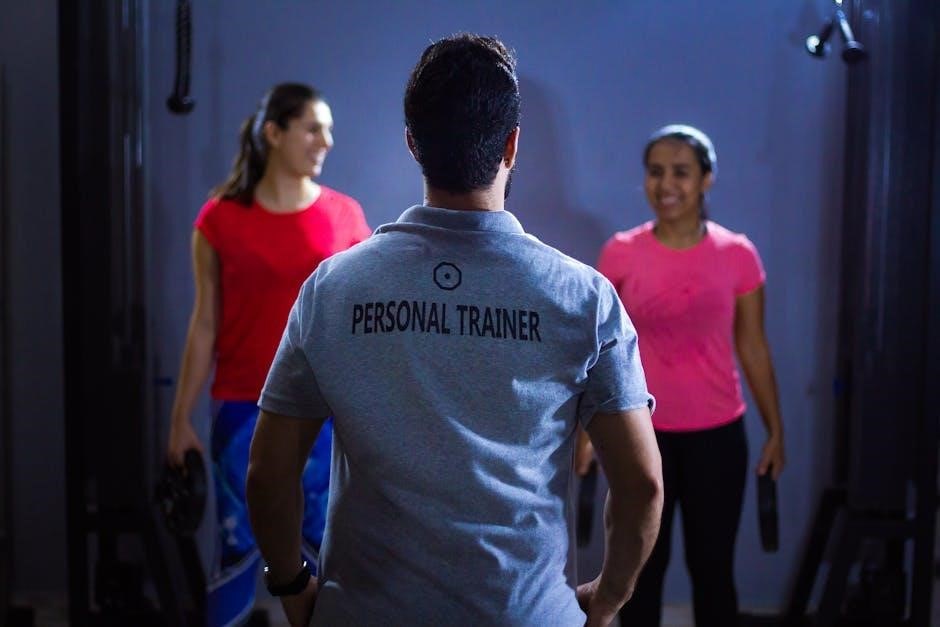
V. Special Populations & Considerations
Exercise professionals’ guides stress adapting training for diverse clients, including those with cardiovascular disease, diabetes, and older adults.
Individualized programs are key for safe and effective fitness outcomes.
A. Training Clients with Cardiovascular Disease
Exercise professionals’ guides emphasize a cautious approach when training clients with cardiovascular disease, prioritizing safety and individualized program design.
Initial assessments, with physician clearance, are paramount to understand limitations and risk factors.
Moderate aerobic exercise, like brisk walking or biking, is often recommended, starting at low intensity and gradually increasing duration and frequency.
Resistance training can be incorporated, focusing on higher repetitions with lighter weights, avoiding Valsalva maneuvers.
Close monitoring of heart rate, blood pressure, and perceived exertion is crucial during sessions.
Trainers must be prepared to recognize signs and symptoms of cardiac distress and have emergency protocols in place.
Education on lifestyle modifications, such as diet and stress management, complements the fitness program.
Regular communication with the client’s healthcare team ensures coordinated care and optimal outcomes.
Adhering to established guidelines and best practices is essential for responsible and effective personal training.
B. Training Clients with Diabetes
Exercise professionals’ guides highlight the significant benefits of exercise for individuals with diabetes, including improved glucose control and insulin sensitivity;
Prior physician clearance and understanding of the client’s medication regimen are essential before initiating a fitness program.
Both aerobic and resistance training are recommended, with a focus on consistency and moderate intensity.
Monitoring blood glucose levels before, during, and after exercise is crucial to prevent hypoglycemia or hyperglycemia.
Trainers should educate clients on recognizing and managing these fluctuations.
Proper footwear and foot care are vital to prevent complications related to diabetic neuropathy.
Hydration is particularly important, as diabetes can affect fluid balance.

Individualized program design, considering the client’s type of diabetes and overall health status, is key.
Following established guidelines ensures safe and effective personal training for this population.
C. Training Older Adults
Exercise professionals’ guides emphasize that training older adults requires a nuanced approach, prioritizing safety and functional independence.
A thorough health screening and physician clearance are paramount, considering potential age-related conditions.
Programs should focus on improving balance, strength, flexibility, and cardiovascular health to maintain quality of life.
Low-impact exercise, such as walking, swimming, and chair-based workouts, are often ideal starting points.
Progressive overload is crucial, but should be implemented cautiously, respecting individual limitations.
Trainers must be attentive to signs of fatigue or discomfort, modifying the program as needed.
Social interaction during fitness sessions can enhance motivation and adherence.
Personal training should address specific needs, like preventing falls and managing chronic conditions.
Adhering to established guidelines ensures safe and effective exercise for this valuable population.

VI. Legal & Business Aspects of Personal Training
Exercise professionals’ guides highlight the necessity of liability insurance and comprehensive waivers to protect personal trainers.
Building a successful fitness business requires strategic marketing and consistent client retention efforts.
A. Liability Insurance & Waivers
Personal trainers, as exercise professionals, operate within a realm where potential risks necessitate robust legal protection; guides emphasize this crucial aspect.
Liability insurance is paramount, safeguarding trainers against potential lawsuits arising from client injuries during training sessions.
Comprehensive coverage should include bodily injury, professional liability, and property damage, providing a financial safety net.
Alongside insurance, meticulously crafted waivers are essential.
These documents clearly outline the inherent risks of exercise, acknowledging client responsibility for their participation.
Waivers should detail pre-existing conditions, medical disclosures, and informed consent, ensuring clients understand and accept potential hazards.
Exercise professionals must ensure waivers are legally sound, regularly updated, and signed by all clients before commencing any fitness program.
Proper documentation, including incident reports and client communication, further strengthens legal defense in unforeseen circumstances.
Adhering to these guidelines minimizes legal vulnerabilities and fosters a safe training environment.
B. Building a Personal Training Business
Establishing a successful personal training business demands more than just fitness expertise; exercise professionals require entrepreneurial acumen, as highlighted in comprehensive guides.
Initial steps involve defining a niche – specializing in areas like weight loss, strength training, or training specific populations – to attract a targeted clientele.
Developing a solid business plan is crucial, outlining financial projections, marketing strategies, and operational procedures.
Legal structures, such as sole proprietorships or LLCs, must be carefully considered for liability protection and tax implications.
Securing appropriate certifications and maintaining continuing education credits demonstrate professionalism and build client trust.
Effective business management includes scheduling, client communication, and financial record-keeping.
Exercise professionals should prioritize building strong relationships with healthcare providers for referrals and collaborative care.
Adhering to ethical guidelines and providing exceptional service are key to long-term success and client retention.
C. Marketing & Client Retention Strategies
Effective marketing is vital for exercise professionals building a personal training business; guides emphasize a multi-faceted approach.
Leveraging social media platforms, creating a professional website, and utilizing online advertising are essential for reaching potential clients.
Content marketing – sharing valuable fitness tips and educational resources – establishes expertise and attracts engagement.
Networking with local businesses, healthcare providers, and community organizations expands reach and generates referrals.
Client retention hinges on delivering exceptional service, personalized training programs, and fostering a supportive environment.
Regularly assessing client progress, providing positive reinforcement, and setting achievable goals enhances motivation.
Offering loyalty programs, referral bonuses, and exclusive workshops demonstrates appreciation and encourages continued engagement.
Maintaining consistent communication and building strong rapport strengthens client relationships, ensuring long-term success and adherence to guidelines.

VII. Current Trends in Fitness
Personal training guides highlight HIIT, functional fitness, and technology’s role; exercise professionals must adapt to these evolving training guidelines.
A. High-Intensity Interval Training (HIIT)
HIIT has emerged as a dominant fitness trend, and personal training guides emphasize its efficiency and effectiveness. This method involves short bursts of intense exercise alternated with brief recovery periods.
Exercise professionals must understand the physiological demands of HIIT to design safe and appropriate programs. Proper warm-up and cool-down protocols are crucial, as is careful consideration of client fitness levels.
Guidelines suggest starting with shorter intervals and gradually increasing intensity and duration. Monitoring heart rate and perceived exertion is essential. Training should be individualized, recognizing that HIIT isn’t suitable for all clients, particularly those with pre-existing health conditions.
Effective HIIT programming requires a thorough understanding of work-to-rest ratios and exercise selection, ensuring optimal results while minimizing risk. Personal trainers should continually update their knowledge based on current research.
B. Functional Fitness Training
Functional fitness training is a cornerstone of modern personal training, and exercise professionals’ guides highlight its focus on movements used in everyday life. This approach prioritizes exercises that improve strength, balance, and coordination for real-world activities.
Training programs emphasize multi-planar movements, mimicking natural human motion; Guidelines recommend incorporating exercises that challenge stability and proprioception. Personal trainers should assess clients’ movement patterns to identify limitations and imbalances.
Effective functional fitness programs often utilize bodyweight exercises, resistance bands, and unstable surfaces. The goal is to enhance functional capacity, making daily tasks easier and reducing the risk of injury. Exercise selection should be tailored to individual client needs and goals.
Guides stress the importance of proper form and technique to maximize benefits and prevent injury. Continual education is vital for exercise professionals to stay current with best practices.
C. The Role of Technology in Fitness
Exercise professionals’ guides increasingly emphasize the integration of technology into personal training. Wearable fitness trackers, heart rate monitors, and smartphone apps provide valuable data for monitoring client progress and tailoring programs.
Technology facilitates remote coaching, allowing trainers to connect with clients virtually and provide ongoing support. Online platforms offer access to a wealth of fitness resources, including workout videos and nutritional guidelines.
Data analytics can help identify trends and optimize training strategies. Virtual reality and augmented reality are emerging technologies offering immersive exercise experiences. Personal trainers must be proficient in utilizing these tools effectively.
However, guides caution against over-reliance on technology, stressing the importance of human interaction and individualized assessment. Ethical considerations regarding data privacy and security are also paramount.