

Tennessee Williams’ masterpiece, “A Streetcar Named Desire,” is readily available as a PDF for study and enjoyment, offering access to its poignant narrative.
Numerous online sources provide downloadable versions, including Signet Classics editions, facilitating exploration of this iconic American play’s themes.
Historical Context of the Play’s Premiere
“A Streetcar Named Desire” premiered in 1947, post-World War II, a period of significant societal shifts in America. The play’s debut at the Barrymore Theater in New York City occurred amidst evolving social norms and anxieties. Accessing the play today, often through readily available PDF formats, allows modern audiences to connect with this historical backdrop.
The post-war era witnessed increased urbanization and a challenge to traditional Southern values, themes powerfully explored within Williams’ work. The availability of the script as a PDF, like the Signet Classics edition, enables detailed study of how Williams mirrored these changes. His personal struggles – alcoholism, depression, and grappling with societal expectations – deeply informed the play’s themes, making it a poignant reflection of its time, now easily accessible for scholarly and personal exploration.
Tennessee Williams’ Biography and Influences
Tennessee Williams, born Thomas Lanier Williams in 1911, experienced a tumultuous life profoundly impacting his writing. His upbringing, marked by a domineering father and a fragile mother, fueled themes of loneliness, desire, and societal decay, vividly present in “A Streetcar Named Desire.” Studying the play via PDF versions allows deeper insight into these biographical connections.
Williams’ personal struggles with alcoholism, depression, and repressed homosexuality heavily influenced his characters and narratives. The play’s pathos, mirroring his own experiences, resonates powerfully. Accessing the script in PDF format, like editions from Penguin Putnam Inc., facilitates close analysis of how his life informed the play’s complex psychological landscape. His work challenged societal norms, and the play’s enduring relevance is amplified through its continued accessibility.

Characters in “A Streetcar Named Desire”
Exploring character dynamics is enhanced by readily available PDF versions of the play, allowing focused study of Blanche, Stella, and Stanley’s complex relationships.
Blanche DuBois: A Detailed Character Analysis
Blanche DuBois, a fading Southern belle, embodies illusion and fragility, meticulously detailed within accessible PDF copies of William’s play.
Her descent into psychological distress, fueled by past traumas and societal pressures, is powerfully portrayed, offering rich material for analysis when studying the downloadable text.
The PDF format allows for close reading of Blanche’s dialogue, revealing her desperate attempts to maintain a facade of respectability and escape a harsh reality.
Examining the script through a PDF provides insight into her reliance on fantasy, her vulnerability, and ultimately, her tragic fate, making character study more efficient.
Readers can trace her unraveling with precision, aided by the convenience of a digital, searchable document.
Stella Kowalski: Her Role and Transformation
Stella Kowalski’s complex journey, vividly depicted in readily available “A Streetcar Named Desire” PDF versions, showcases a compelling transformation.
Initially caught between her loyalty to her sister, Blanche, and her passionate connection with Stanley, Stella’s choices are laid bare within the script’s downloadable format.
The PDF allows for detailed examination of her dialogue, revealing her internal conflict and gradual acceptance of her new life with Stanley.
Analyzing Stella’s arc through the PDF highlights her pragmatic nature and the societal forces influencing her decisions, offering a nuanced understanding of her character.
Readers can trace her evolution, aided by the convenience of a digital, searchable document, and understand her ultimate complicity.
Stanley Kowalski: Exploring His Masculinity and Brutality
Stanley Kowalski’s raw and often brutal masculinity is powerfully presented within the accessible “A Streetcar Named Desire” PDF format.
The downloadable script allows for a close reading of his interactions, revealing his dominance and territorial nature, central to understanding his character.
Analyzing the PDF reveals how Williams portrays Stanley as a product of his working-class background and the post-war societal expectations of men.
The PDF facilitates examination of his actions, prompting questions about the roots of his aggression and the impact of his behavior on Blanche and Stella.
Readers can dissect his motivations and the play’s commentary on masculinity through the convenience of a digital, searchable document.
Harold “Mitch” Mitchell: A Study in Vulnerability
The character of Harold “Mitch” Mitchell, a man grappling with deep-seated vulnerability, is readily accessible for detailed study through the “A Streetcar Named Desire” PDF.
The downloadable script allows readers to trace Mitch’s emotional arc, observing his initial gentleness and subsequent disillusionment as Blanche’s illusions unravel.
Analyzing the PDF reveals the societal pressures contributing to Mitch’s insecurities and his desperate search for genuine connection.
The PDF format enables a focused examination of his dialogue, highlighting his attempts to navigate love and intimacy amidst societal expectations.
Readers can dissect his motivations and the play’s commentary on vulnerability through the convenience of a digital, searchable document.

Themes Explored in the Play
The play’s core themes—desire, illusion, and societal decay—are powerfully presented within the accessible “A Streetcar Named Desire” PDF document.
The Clash Between Old Southern Ideals and Modern Reality
Tennessee Williams’ play vividly portrays the disintegration of the Old South’s aristocratic values confronting the burgeoning, industrializing modern world. Blanche DuBois embodies a fading gentility, clinging to a romanticized past, while Stanley Kowalski represents the raw, pragmatic energy of the new America.
This conflict is readily apparent when examining a “Streetcar Named Desire” PDF, allowing close study of dialogue and stage directions revealing the characters’ differing worldviews. The downloadable text highlights Blanche’s dependence on illusion and refinement, contrasted with Stanley’s blunt physicality and working-class background.
The PDF format facilitates detailed analysis of how Williams uses these characters to explore the irreconcilable differences between a bygone era and the harsh realities of post-war America, ultimately leading to Blanche’s tragic downfall.
Illusion vs. Reality: Blanche’s Psychological State
Tennessee Williams masterfully depicts Blanche DuBois’ descent into delusion as a coping mechanism against a traumatic past and a harsh present. Her constructed reality, filled with fabricated stories and a desperate need for admiration, clashes violently with the brutal truth surrounding her.
Accessing a “Streetcar Named Desire” PDF allows for a focused examination of Blanche’s dialogue and actions, revealing the fragility of her mental state. The text underscores her reliance on illusion to mask her vulnerabilities and escape painful memories.
Through the PDF, readers can trace the unraveling of Blanche’s carefully constructed facade, ultimately exposing the devastating consequences of denying reality and the destructive power of repressed trauma.
Desire and Its Destructive Power
Tennessee Williams portrays desire not as a purely romantic force, but as a primal, often destructive drive that fuels the central conflicts in “A Streetcar Named Desire.” Both Stanley and Blanche are consumed by their desires, leading to tragic consequences.
A downloadable “Streetcar Named Desire” PDF provides a detailed textual analysis of how these desires manifest – Stanley’s raw, physical lust versus Blanche’s yearning for security and affection. The script reveals how unchecked passion can erode morality and lead to exploitation.
Examining the PDF allows readers to witness the devastating impact of desire on all characters, ultimately demonstrating its power to dismantle illusions and expose the darker aspects of human nature.
Gender Roles and Power Dynamics
“A Streetcar Named Desire” sharply critiques traditional gender roles and the resulting power imbalances of post-war America. The play showcases a stark contrast between Blanche’s fading Southern belle persona and Stella’s adaptation to a more pragmatic existence.
Accessing a “Streetcar Named Desire” PDF allows for close examination of how Stanley asserts dominance through physical strength and societal expectations, while Blanche attempts to wield power through manipulation and illusion.
The script, readily available in PDF format, reveals how these dynamics contribute to the play’s tragic outcome, highlighting the vulnerability of women within a patriarchal society and the destructive consequences of unequal power relationships.

Symbolism in “A Streetcar Named Desire”
A “Streetcar Named Desire” PDF unlocks deeper understanding of potent symbols—the streetcar, light, and colors—revealing layers of meaning within Williams’ evocative drama.
The Streetcar Itself: A Symbol of Fate and Transition
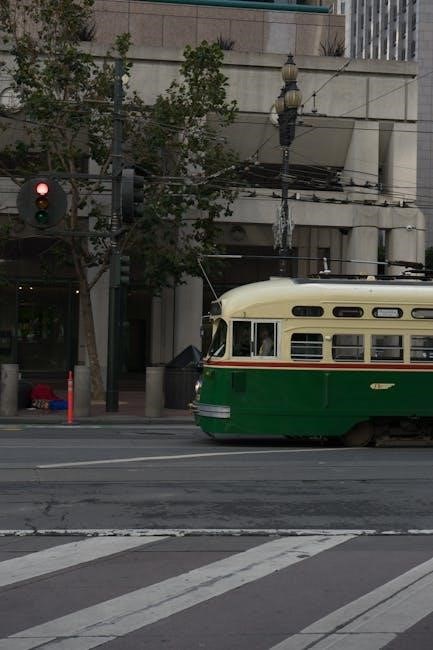
The streetcar, central to the play’s title, embodies Blanche DuBois’s journey and descent, readily explored within a downloadable “A Streetcar Named Desire” PDF.
It represents the relentless passage of time and the unavoidable trajectory towards a predetermined fate, mirroring Blanche’s loss of Belle Reve and her fragile grip on reality.
The streetcar’s route symbolizes the transition between Blanche’s idealized past and the harsh realities of her present, a contrast vividly portrayed in the script available in PDF format.
This mode of transport connects Blanche to Stella and Stanley, initiating the play’s central conflict and ultimately leading to her tragic downfall, all detailed within the accessible text.
Analyzing the play’s symbolism is greatly enhanced by having the complete script in PDF form, allowing for close reading and nuanced interpretation.
Light and Darkness: Representing Truth and Deception
Light and darkness are potent symbols in “A Streetcar Named Desire,” meticulously detailed within a readily available PDF version of the play’s script.
Blanche actively avoids direct light, preferring the soft glow of paper lanterns, representing her attempts to conceal her fading beauty and fabricated past, easily examined in the PDF.
Stanley, conversely, embodies a harsh, uncompromising reality, often associated with bright, revealing light, a contrast highlighted when reading the play as a PDF.
This dichotomy underscores the play’s central theme of illusion versus reality, with light exposing truth and darkness enabling deception, a key element accessible through the PDF.
Studying these symbolic representations is simplified by having the complete text in PDF format, allowing for detailed analysis of Williams’s masterful use of imagery.
The Colors White and Red: Symbolism of Purity and Passion
White and red are powerfully symbolic colors in “A Streetcar Named Desire,” readily apparent when studying the play’s script in PDF format.
Blanche often associates herself with white, attempting to project an image of Southern gentility and purity, a facade meticulously detailed within the downloadable PDF.
However, this is consistently contrasted with red, representing raw desire, danger, and Stanley’s primal masculinity, vividly portrayed throughout the PDF’s text.
The color red also foreshadows violence and the eventual destruction of Blanche’s illusions, a narrative thread easily traced when reading the play as a PDF.
Analyzing these color motifs is greatly enhanced by access to the complete text in PDF, allowing for a deeper understanding of Williams’s symbolic language.
New Orleans Setting: Reflecting the Play’s Themes
The vibrant and steamy setting of New Orleans is integral to “A Streetcar Named Desire,” a connection easily observed when studying the play’s PDF version.
Williams utilizes the city’s atmosphere – its blend of cultures, its sensuality, and its undercurrent of decay – to mirror the play’s central themes, all detailed within the accessible PDF.
The French Quarter’s duality, representing both allure and danger, parallels Blanche’s own fragile existence, a contrast highlighted in the PDF’s textual descriptions.
The city’s social stratification and the clash between old and new worlds are also reflected in the characters’ interactions, readily apparent when reading the PDF.
Accessing the play as a PDF allows for a focused examination of how the setting actively shapes the narrative and amplifies its emotional impact.

Dramatic Techniques Used by Tennessee Williams

Tennessee Williams’ masterful techniques, vividly showcased in the readily available PDF of “A Streetcar Named Desire,” create a powerfully immersive theatrical experience.
Use of Stage Directions and Setting
Tennessee Williams’ meticulous stage directions, abundantly present within the PDF version of “A Streetcar Named Desire,” are crucial to understanding the play’s emotional landscape. He doesn’t merely describe a setting; he crafts an atmosphere.
The detailed descriptions of the Kowalski’s apartment – cramped, vibrant, and reflecting a working-class reality – contrast sharply with Blanche’s faded gentility. These directions, easily accessible when reading the PDF, guide actors and directors in conveying the play’s central conflicts.
Williams utilizes setting not as mere backdrop, but as a character itself, mirroring the psychological states of those inhabiting it. The PDF allows close study of these nuances, revealing how the physical space embodies the play’s themes of desire, decay, and societal clash.
Dialogue and its Revelation of Character
The power of “A Streetcar Named Desire,” readily apparent when studying the PDF text, lies significantly within its richly layered dialogue. Tennessee Williams masterfully employs language to unveil the inner lives of his characters, exposing their vulnerabilities and hidden motivations.
Blanche’s ornate, often deceptive speech contrasts sharply with Stanley’s blunt, pragmatic pronouncements. Accessing the play through a PDF allows for careful analysis of subtext, revealing the power dynamics at play.
Each character’s linguistic style – Stella’s attempts at mediation, Mitch’s hesitant vulnerability – is meticulously crafted. The PDF format facilitates close reading, highlighting how dialogue isn’t just conversation, but a battle for dominance and a desperate search for connection.
Music and Sound Effects: Enhancing the Atmosphere
While a PDF of “A Streetcar Named Desire” primarily presents the written text, understanding Tennessee Williams’ stage directions reveals the crucial role of sound in creating the play’s oppressive atmosphere. The evocative soundscape, though not directly conveyed in the PDF, is integral to the experience.
The distant polka music, the blues emanating from the bars, and the ever-present streetcar itself all contribute to the sense of longing and decay. These sonic elements, detailed within the PDF’s stage directions, amplify the emotional tension.
Williams uses sound to foreshadow events and reflect the characters’ internal states, immersing the audience in the humid, claustrophobic world of New Orleans. Studying the PDF alongside performance notes unlocks a deeper appreciation.

Critical Reception and Legacy
PDF versions of “A Streetcar Named Desire” allow continued study of this controversial, yet enduring, play, sparking debate since its 1947 premiere.
Initial Reviews and Controversies
Initial reactions to “A Streetcar Named Desire” were notably mixed, with some critics praising Tennessee Williams’ innovative dramatic techniques and psychological depth, while others found the play’s themes of sexuality and violence disturbing. The availability of the play in PDF format today allows modern audiences to revisit these original critiques.
Controversy surrounded the portrayal of Stanley Kowalski, seen by some as a brutal and misogynistic character, and Blanche DuBois, whose mental state and past were subject to moral scrutiny. The play’s exploration of taboo subjects, like desire and societal repression, fueled heated discussions. Accessing the script as a PDF enables a closer examination of the nuances that sparked such strong reactions upon its debut.
Despite the initial uproar, “A Streetcar Named Desire” quickly gained recognition as a landmark achievement in American theatre, solidifying Williams’ reputation as a major playwright.
Adaptations: Film and Stage Productions
“A Streetcar Named Desire” has experienced numerous adaptations, most famously the 1951 film starring Marlon Brando and Vivien Leigh, which captured the play’s raw emotional power. Studying the original play as a PDF provides valuable context for appreciating these interpretations.
Stage productions continue to be mounted worldwide, each offering a unique vision of Williams’ characters and themes. The accessibility of the PDF script allows directors and actors to engage directly with the playwright’s intentions.
These adaptations often highlight different aspects of the story, from Stanley’s dominance to Blanche’s fragility, demonstrating the play’s enduring versatility. Comparing the PDF text to various productions reveals the richness and complexity of Williams’ work;
The Play’s Enduring Relevance Today
“A Streetcar Named Desire” remains strikingly relevant, exploring themes of societal change, mental health, and power dynamics that resonate deeply with contemporary audiences. Accessing the play as a PDF allows for focused analysis of these enduring issues.
The clash between illusion and reality, central to Blanche’s character, mirrors modern struggles with identity and authenticity. Studying the PDF script illuminates the nuances of Williams’ commentary on these universal human experiences.
Furthermore, the play’s depiction of gender roles and social class continues to spark critical discussion, prompting reflection on ongoing inequalities. The readily available PDF fosters continued engagement with this powerful and thought-provoking work.

“A Streetcar Named Desire” as a Psychological Study
Analyzing the PDF version reveals complex character motivations, offering insights into Blanche’s deterioration and Stanley’s drives, deepening psychological understanding.
Blanche’s Mental Deterioration: A Clinical Perspective
Examining the play’s PDF allows for close textual analysis of Blanche DuBois’s unraveling psyche. Her reliance on illusion, coupled with a history of trauma—hinted at within the text—suggests a dissociative disorder.
The loss of Belle Reve, symbolic of her past, exacerbates her fragile mental state. Her increasingly erratic behavior, fueled by alcohol and desperation, points towards a potential psychotic break.
A clinical reading, facilitated by the readily available PDF format, reveals patterns consistent with complex PTSD and delusional thinking. The play doesn’t offer a diagnosis, but provides compelling evidence of a woman profoundly damaged by life’s harsh realities, desperately clinging to a fabricated sense of self.
Stanley’s Psychological Motivations
A detailed reading of “A Streetcar Named Desire,” easily achieved through a PDF version, reveals Stanley Kowalski as more than a brutish antagonist. His actions stem from deep-seated insecurities and a need to assert dominance within his patriarchal world.
Stanley perceives Blanche as a threat to his control over Stella and his domestic sphere. His relentless exposure of her lies isn’t merely malicious; it’s a desperate attempt to dismantle her illusions and reaffirm his own reality.
The PDF allows for tracing Stanley’s anxieties about class and masculinity, fueling his aggression. He embodies a primal force, reacting to perceived challenges with visceral intensity, ultimately destroying Blanche to secure his position.
Stella’s Complicity and Internal Conflict
Accessing “A Streetcar Named Desire” as a PDF facilitates a nuanced understanding of Stella Kowalski’s complex character. She exists in a painful state of internal conflict, torn between her refined upbringing and her passionate connection with Stanley.
Stella’s complicity in Blanche’s downfall isn’t simply a matter of choosing Stanley; it’s a desperate attempt to reconcile her conflicting desires. She’s drawn to Stanley’s vitality, yet haunted by Blanche’s vulnerability.
The PDF allows close examination of Stella’s choices, revealing a woman trapped by societal expectations and her own emotional needs. Her ultimate betrayal of Blanche is a tragic consequence of her inability to bridge these divides.

The Play’s Exploration of Social Issues
A readily available PDF of “A Streetcar Named Desire” reveals potent commentary on class, gender, and societal repression in post-war America.
Class Conflict and Social Mobility
Accessing “A Streetcar Named Desire” as a PDF immediately highlights the stark class divisions central to the play’s drama. The Kowalski’s working-class existence sharply contrasts with Blanche DuBois’s faded gentility, representing a crumbling Southern aristocracy.
This disparity fuels much of the conflict, as Stanley embodies the rising, pragmatic new America, while Blanche clings to outdated ideals. The PDF format allows for close textual analysis of dialogue revealing these tensions.
Furthermore, the play subtly explores limited social mobility, demonstrating the difficulties of transcending one’s socio-economic background. Blanche’s attempts to reinvent herself are ultimately unsuccessful, underscoring the rigid societal structures of the time, readily apparent when studying the text.
The Treatment of Women in Post-War America
Reading “A Streetcar Named Desire” in PDF format provides a focused lens on the play’s depiction of women’s limited roles in post-war America. Blanche and Stella represent contrasting responses to societal pressures, revealing the constraints placed upon them.
Blanche’s vulnerability and reliance on male attention expose the precarious position of women lacking economic independence. Stella’s choice to remain with Stanley, despite his brutality, highlights the societal expectations of female domesticity.
The PDF allows for detailed examination of the dialogue and stage directions, revealing the power dynamics at play and the subtle, yet pervasive, sexism of the era. It underscores the challenges women faced in asserting agency and escaping patriarchal control.
Homosexuality and Societal Repression
Accessing “A Streetcar Named Desire” as a PDF facilitates a closer reading of the play’s subtle exploration of homosexuality and the societal repression surrounding it in the 1940s and 50s.
The character of Mitch’s anxieties regarding his mother and his inability to form lasting relationships hint at suppressed desires and the shame associated with non-normative sexuality.
Williams, himself grappling with his own identity, infused the play with coded language and symbolism. Studying the text in PDF form allows for detailed analysis of these nuances, revealing the devastating consequences of societal intolerance and the internal conflicts it engendered.
Availability of the Play in PDF Format
PDF copies of “A Streetcar Named Desire” are widely accessible online through various platforms, offering convenient study and reading options for enthusiasts.
Sources for Downloading “A Streetcar Named Desire” PDF
Numerous online repositories offer “A Streetcar Named Desire” in PDF format. Websites like Scribd and Internet Archive frequently host digital copies, though availability can vary due to copyright restrictions.
Project Gutenberg, while not always containing the play itself, often links to resources or related works by Tennessee Williams. Additionally, many university and college websites provide course materials, sometimes including a PDF version for enrolled students.
Retailers like Amazon also offer digital editions that can be downloaded and read on various devices. Always verify the legitimacy of the source and respect copyright laws when accessing and distributing digital content.
Signet Classics editions are commonly found in PDF form.
Legality and Copyright Considerations
Downloading and distributing “A Streetcar Named Desire” PDFs without proper authorization can infringe on copyright laws. Tennessee Williams’ work remains protected, and unauthorized reproduction is illegal.
Accessing the play through legitimate sources, such as purchased digital editions or library resources, ensures compliance with copyright regulations. Public domain status varies by country; therefore, verifying the legal standing of a PDF before downloading is crucial.
Educational use may fall under “fair use” guidelines, but this depends on the specific context and jurisdiction. Always prioritize legally obtained copies to support the author’s estate and the publishing industry.
Respecting intellectual property is paramount.